


Dead Poet Society - Monarch

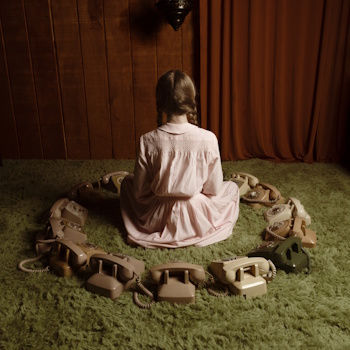
Dead Poet Society have never sounded particularly interested in taking the easy way out. Since forming in 2013, the Los Angeles-based quartet has built its identity around emotional tension—the uneasy space where vulnerability meets aggression, melody collides with heaviness, and thought gives way to instinct. On their third album, Monarch, out October 2, 2026, via Spinefarm Records, that tension isn't merely part of the band's sound. It is the foundation of everything.
Across twelve tracks, vocalist and guitarist Jack Underkofler, guitarist Jack Collins, bassist Dylan Brenner, and drummer Will Goodroad strip Dead Poet Society down to their most essential elements. The result is an album that feels simultaneously raw and meticulously constructed, embracing the band's alt-rock instincts while pushing further into darker, more visceral territory.
Where 2021's -!- introduced Dead Poet Society's singular voice to a wider audience and 2024's Fission examined the upheaval of adulthood, Monarch turns inward. The question is no longer simply who the band has become, but what remains when every assumption, expectation, and carefully constructed identity is peeled away.
That excavation is immediately apparent in "Hollywood On Fire," which sets the album's cinematic tone, before "Roach" plunges headfirst into resentment. "Resent. That is what this song is about," the band explains, and the track makes that emotion impossible to ignore. Its fury feels less like an outburst than something that has been allowed to sit and fester, becoming increasingly consuming.
"Die If You Don't" continues that volatile momentum, while "Sinner Systems" offers one of the album's most compelling examples of Dead Poet Society's ability to make heaviness feel unpredictable. Detuned fretless grooves give the song a sinister physicality, while its melodic pull and hedonistic lyrics create a portrait of excess and emotional numbness. The contrast is central to Monarch: the songs can be punishing without sacrificing melody, and melodic without becoming comfortable.
"Lost" provides another shift in perspective before "Cold" turns its attention toward identity and the exhausting performance of modern life. Goodroad describes the song as being about people reshaping themselves for acceptance and validation until they no longer recognize who they are. It's a theme that fits perfectly within the album's larger process of personal excavation—the realization that sometimes the version of ourselves we present to the world has little connection to what we actually feel.
That disconnect between thought and feeling is one of Monarch's defining ideas. Underkofler has previously described the band's artistic goal as creating a direct line between what an artist feels and what a listener ultimately feels. On Monarch, that line is unusually clear. The songs don't necessarily explain their emotions; they make the listener inhabit them.
The following pair of tracks, "Psalm 136" and "Dead On The Inside," deepen the album's darker emotional center, while the album's most recent single, "Miami For The Weekend," revisits the band's desire to carve out its own territory. Underkofler's ambition for the record was to "swing for the fences," digging deeper into everything that makes Dead Poet Society who they are. That ambition is evident throughout the entire thing. Rather than reinventing the band, Monarch intensifies the characteristics that have already made them distinctive.
"Get Hot" and "The Park" keep the record moving without compromising its heavier atmosphere, while the album's closing track "The Art of Suffering" brings the album's emotional journey toward its conclusion. By this point, Monarch has travelled through anger, grief, resentment, alienation, excess, and self-examination, yet it never feels like a collection of disconnected moods. There is a clear emotional throughline running underneath the entire record.
Much of that cohesion comes from producer Paul Meany, who approached the project not as someone trying to reshape Dead Poet Society, but as what Underkofler calls a "professional listener." Having worked with artists including Twenty One Pilots, Pierce The Veil, and Yungblud, Meany understands how to give a band room to remain itself while challenging it to go further. His production keeps the group's four-way creative friction intact rather than sanding it down.
Adam Hawkins' mix complements that approach, giving the album the weight and clarity needed for its more aggressive moments while allowing its melodic details to remain prominent. The resulting sound is massive without feeling overly polished. There is still a sense of danger in it—the feeling that the songs could break apart at any moment.
That danger has always been part of Dead Poet Society's appeal. The band has accumulated more than two hundred million streams, scored multiple Top 10 rock radio singles, and performed at major festivals including Reading & Leeds, Welcome To Rockville, Sonic Temple, Graspop, and 2000Trees. Yet Monarch doesn't sound like a band attempting to replicate what already worked. It sounds like four musicians trying to get closer to the emotional core of their own music.
The album's title feels fitting for that reason. Monarch is about taking ownership of territory—not necessarily physical territory, but an artistic and emotional space that belongs unmistakably to Dead Poet Society. The band isn't interested in fitting neatly into modern rock's existing categories. Instead, it takes elements of alternative rock, heavy music, atmospheric melody, and experimental instinct and bends them around emotion.
"Roach," "Sinner Systems," "Cold," "Lost," and "The Art of Suffering" demonstrate just how effectively that approach works, but the album's greatest strength is the way those individual pieces function as part of a larger journey. Monarch is less concerned with delivering a collection of singles than with creating an atmosphere that lingers after the final note.
Dead Poet Society began as an obsessive study in emotional contrast. On Monarch, that study reaches its most distilled form. Anger and sadness occupy the same space. Beauty emerges from discomfort. Melody flickers against distortion. While thought wrestles with instinct.
Rather than asking what Dead Poet Society should become next, Monarch asks a more fundamental question: what is left when the band stops trying to be anything other than itself? The answer is a record that feels deeply personal, fiercely ambitious, and unmistakably Dead Poet Society.
Check out more from Dead Poet Society:


Comments