


Legends On Tour - Night One: Sabaton, Pop Evil, and Wings of Steel - Winnipeg, MB
Sabaton may have been forced to downsize their battlefield for the first night of Legends On Tour in Winnipeg, but there was nothing remotely small about the spectacle. After a long nine years away from touring Canada, they took over the Burton Cummings Theatre on October 1, 2026, for the first of two nights; the Swedish metal institution brought its signature combination of history, heavy riffs, and theatrical bombast to a venue considerably more intimate than the arenas and festivals they typically command. The result was a show that proved Sabaton doesn't necessarily need all the artillery in its arsenal to wage war onstage.


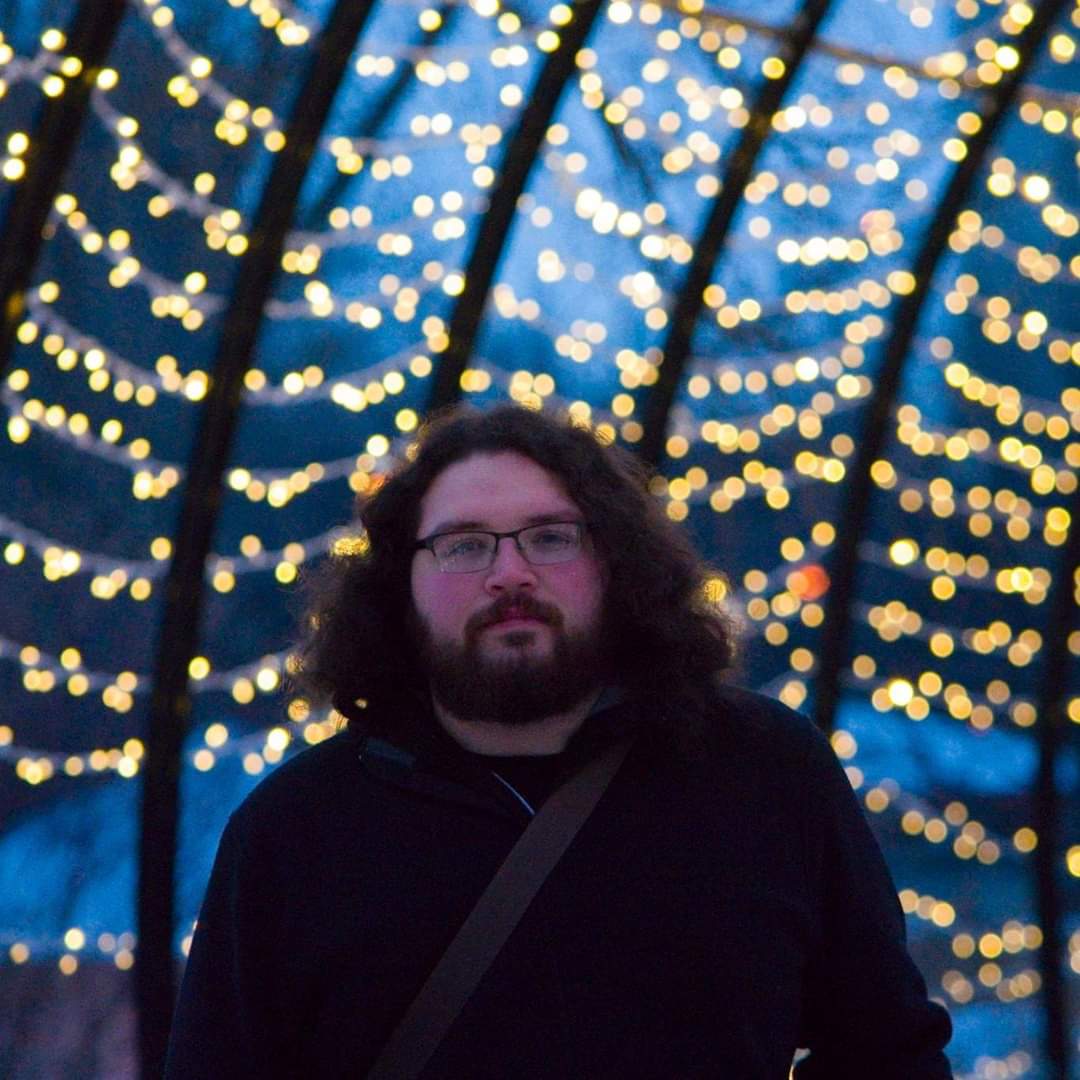
Wings of Steel. All photos by Samuel Stevens.
The evening began with the Los Angeles-based '80s hair metal-inspired Wings of Steel, whose classic heavy metal attack provided a fitting warm-up. Opening with “Intro (The Grand Fields of Death),” the band moved through “Burning Sands,” “Liar in Love,” “Saints and Sinners,” “Winds of Time,” and “Wings of Steel.” Their set was short and direct, but effective in establishing the night's old-school metal foundations.
Hard rockers Pop Evil followed with a considerably more modern hard rock/alternative metal approach. Their nine-song set opened with “Trenches” and “Deathwalk” before moving through “Wishful Thinking,” “Breathe Again,” a charged take on “Paranoid (Crash & Burn),” “Criminal,” “Deal with the Devil,” “Let the Chaos Reign,” and “Waking Lions.” Where Wings of Steel leaned into traditional metal, Pop Evil brought a polished, muscular hard rock and alt metal punch that kept the Burton Cummings Theatre moving before the main event.
The obvious challenge of bringing Legends On Tour into a theatre was that the Burton Cummings simply couldn't accommodate the full-scale production the band has become known for. The two tanks normally associated with Sabaton's stage setup on this tour were reduced to one, while concussion bombs and fireworks were off the table entirely. Rather than letting those restrictions diminish the spectacle, however, the band found another way to make the theatre shake: eight fire cannons positioned at the back of the stage received approval, and they were put to very good use being used during almost every song of the set.
From the opening seconds of “Ghost Division,” the visual impact was immediate. Flames erupted behind the band as Joakim Brodén and company launched into one of Sabaton's most recognizable anthems. “Yamato” followed with another burst of fire, while “The Red Baron” kept the momentum high without the pyrotechnics. By the time “The Last Stand” and “Stormtroopers” arrived, the limitations of the venue were becoming almost irrelevant. Sabaton had turned a theatre stage into its own miniature battlefield.


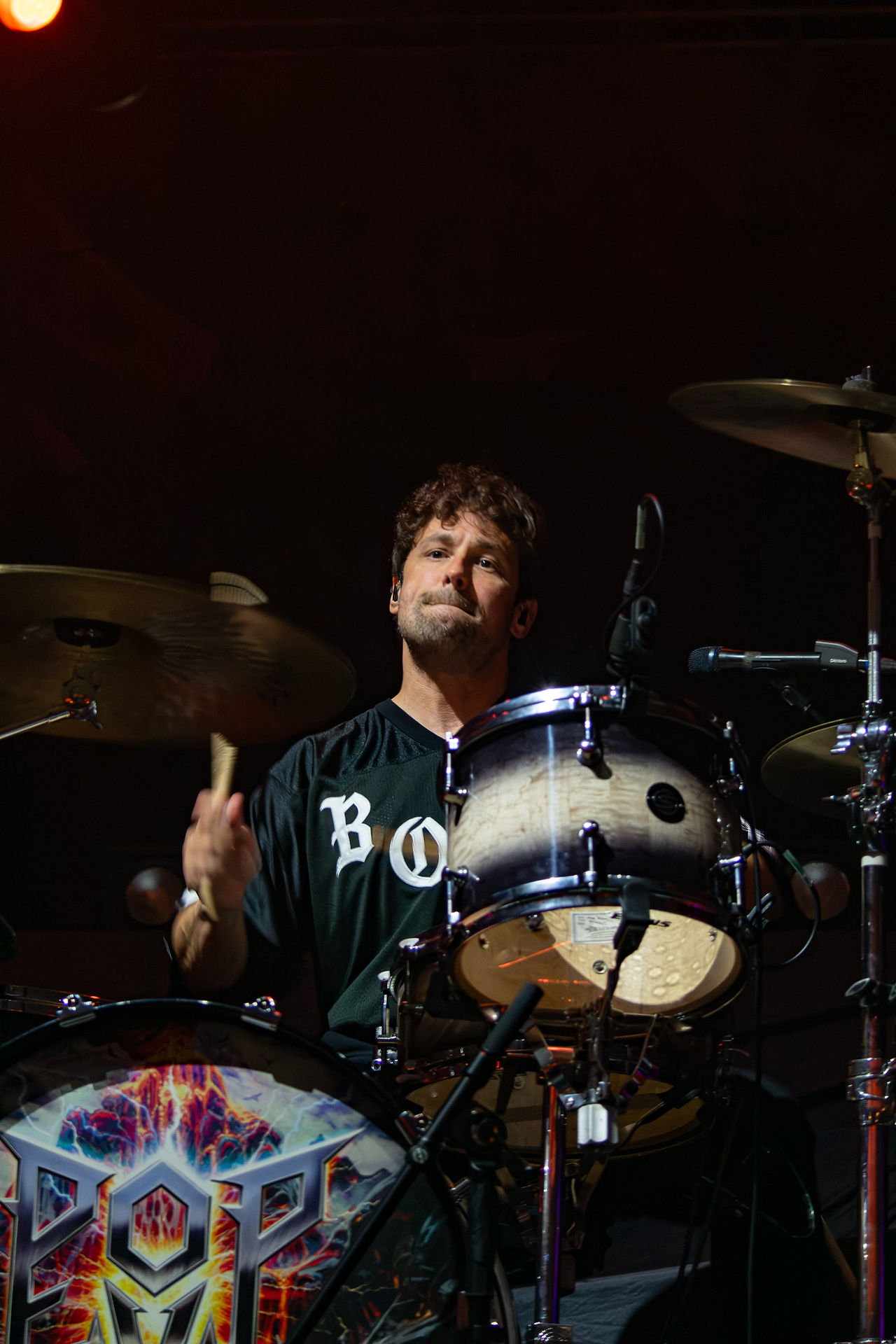


Pop Evil. All photos by Samuel Stevens.
The setlist itself offered an impressive cross-section of the band's catalogue. “Christmas Truce” provided one of the evening's most dramatic changes of pace, its emotional weight standing in stark contrast to the explosive numbers surrounding it. “Soldier of Heaven” continued that more reflective stretch before the band returned to full combat mode with “Crossing the Rubicon” and “Night Witches,” both backed by roaring columns of flames.
One of Sabaton's greatest strengths has always been its ability to make historical subject matter feel immediate and larger than life, and that quality was particularly effective in the theatre environment. With the audience packed closer to the stage than they would be in an arena, songs such as “I, Emperor,” “The Attack of the Dead Men,” and “Bismarck” carried an added sense of intimacy. “The Attack of the Dead Men” was especially theatrical, with a man in a gas mask, blowing “gas” into the audience to reinforce the song's grim subject matter.
The second half of the performance became increasingly explosive. “Fields of Verdun,” “Hordes of Khan” and “Templars” all received the full fire-cannon treatment, filling the back of the stage with bursts of heat and light. The single tank may have looked slightly lonely compared with Sabaton's usual two-tank configuration, but it still served as an imposing centrepiece for a band whose entire presentation is built around making heavy metal feel like a military campaign.
Then came the home stretch of Sabaton's immense set list. “Primo Victoria” was every bit the crowd-pleaser it needed to be, with the Burton Cummings Theatre transformed into a mass singalong. “Swedish Pagans” kept the momentum rolling before “To Hell and Back” brought the night to its fiery conclusion. The latter was another pyrotechnic highlight, sending flames skyward as Sabaton closed out the eighteen-song set.
There was no encore, and there didn't need to be one. If anything, the decision to end the night after “To Hell and Back” made the set feel deliberately constructed rather than artificially extended. Sabaton had already delivered nearly ninety minutes of historical metal, audience participation, and controlled destruction, squeezing as much spectacle as possible into a theatre that couldn't accommodate the full Legends On Tour production.
For a band accustomed to commanding enormous stages, Sabaton's first Winnipeg night demonstrated that scale isn't everything. One tank instead of two, eight fire cannons at the back of the stage instead of several more boxed around the band, fireworks, and concussion bombs, and in a theatre instead of an arena might sound like a compromised version of the Legends On Tour experience on paper. In practice, the stripped-back production made little difference once the lights went down.


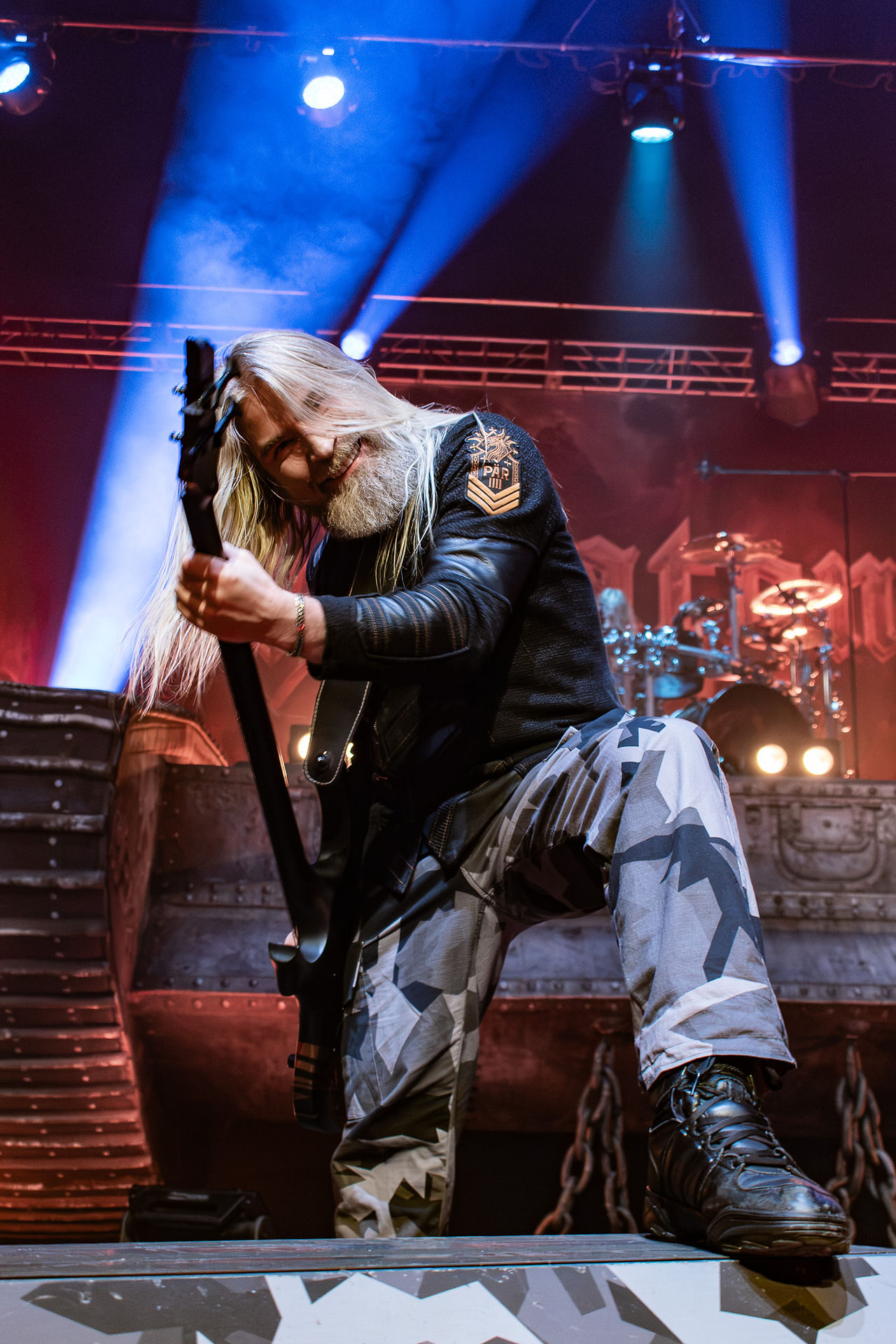


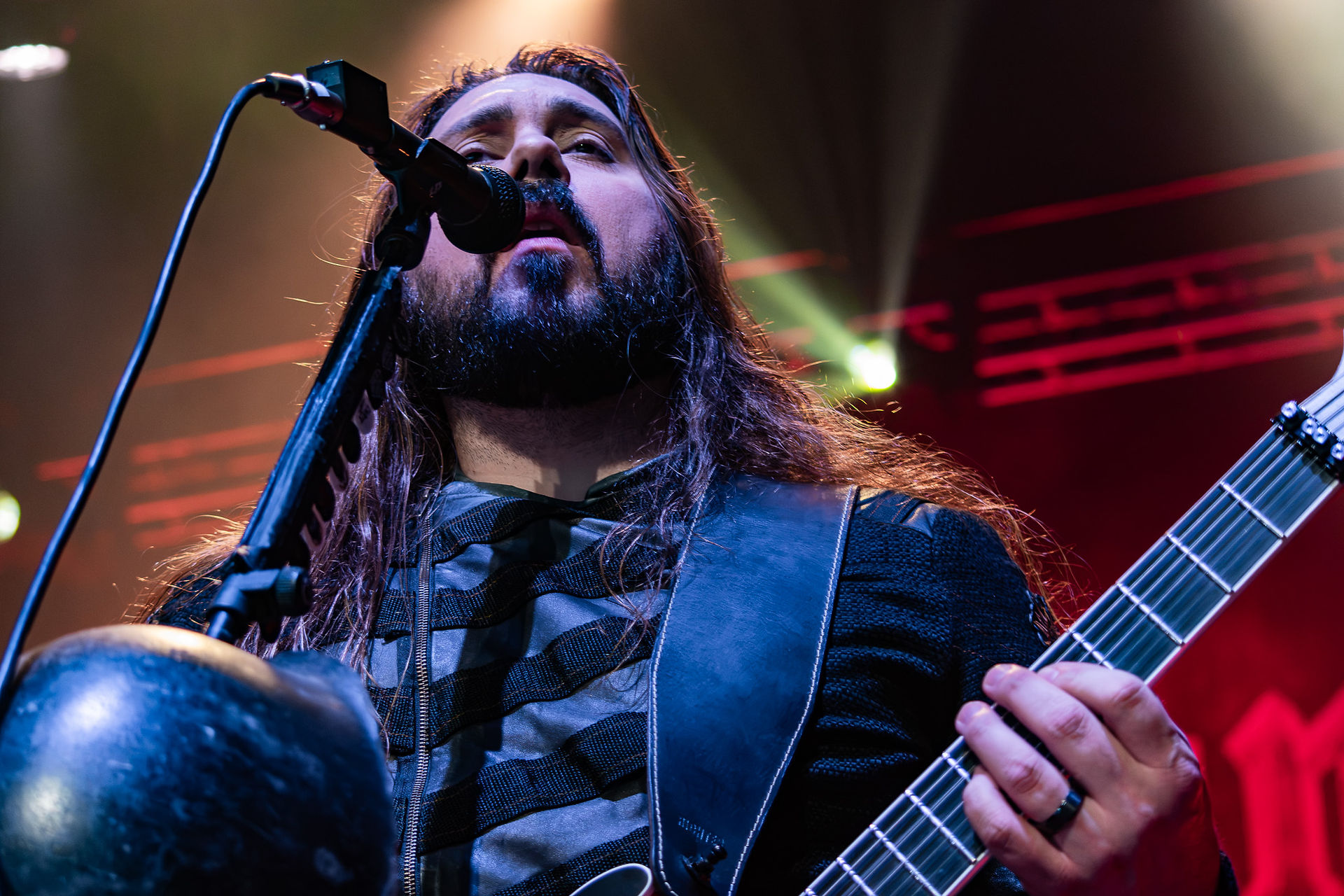
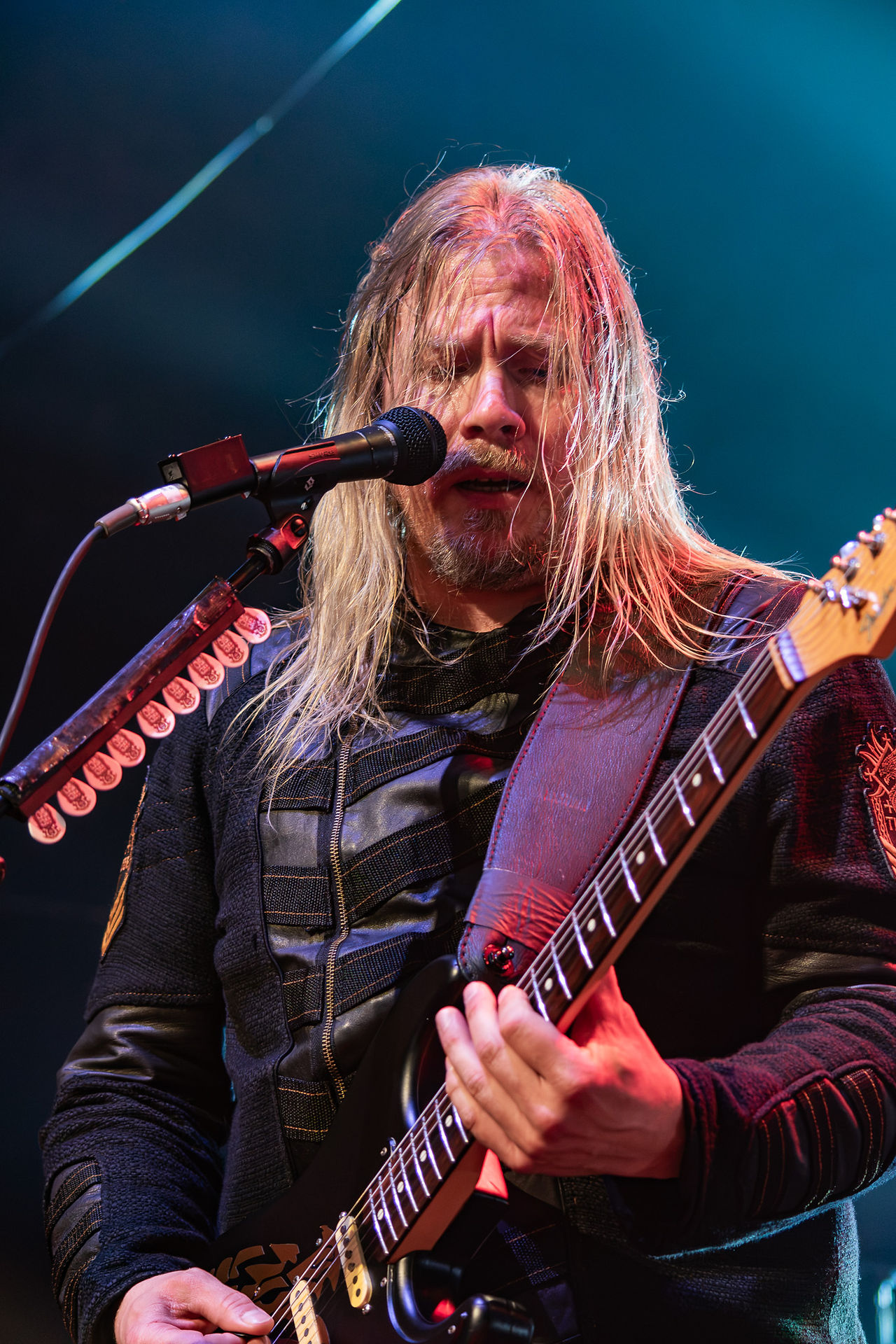


Sabaton. All photos by Samuel Stevens.


Comments